AI vs Human Receptionist for Lawyers: An Honest Comparison
Should your law firm use AI intake or human receptionists? We break down the real trade-offs in cost, quality, availability, and client experience.
Talk24 Team
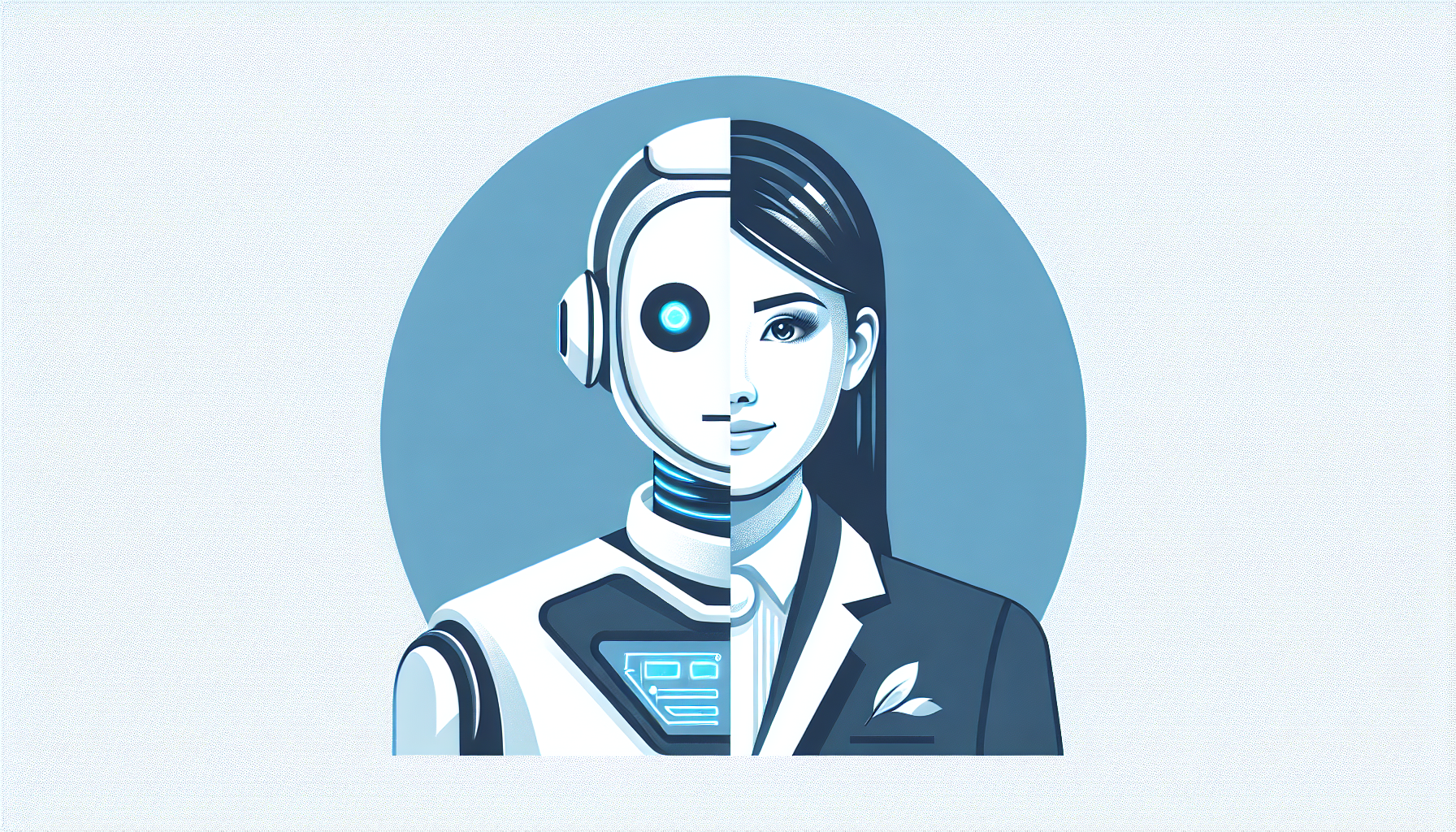
The question comes up constantly: should law firms use AI or human receptionists?
The honest answer is: it depends. Both have genuine strengths. Both have real limitations. The right choice depends on your practice, your clients, and your priorities.
This guide breaks down the trade-offs honestly—not as an AI vendor trying to sell you AI, but as a realistic assessment of what each approach does well and where it falls short.
What We're Actually Comparing
Let's be precise about what we mean:
AI Receptionist/Intake: Software that handles initial client interactions through chat, text, or voice using artificial intelligence. It converses naturally, answers questions, qualifies leads, and captures information without human involvement.
Human Receptionist: A person—either in-house or through a virtual receptionist service—who answers phones, handles chat, takes messages, and manages initial client contact.
Both can work well. The question is which works better for your specific situation.
The Case for AI Receptionists
Always Available
AI doesn't sleep, take breaks, call in sick, or go on vacation:
- 24/7/365 availability at consistent quality
- No staffing gaps during lunch, holidays, or turnover
- Immediate response to every inquiry
For practice areas with after-hours urgency (personal injury, criminal defense, immigration), this matters enormously.
Perfect Consistency
Every AI conversation follows the same logic:
- Same questions asked every time
- Same criteria applied uniformly
- No bad days or rushed interactions
- Quality doesn't degrade at high volume
Human receptionists are human—they have good days and bad days, may rush when busy, and vary in skill level.
Scalability
AI handles volume without added cost:
- Flat monthly pricing regardless of volume
- Unlimited concurrent conversations
- No hiring, training, or management as you grow
Virtual receptionist services charge per minute or per call—costs scale linearly with volume, often faster than revenue.
Deeper Qualification
AI can handle sophisticated intake:
- Practice-area-specific questions
- Lead scoring based on your criteria
- Case qualification during conversation
- Structured data capture for your systems
Most human receptionists take messages. AI conducts intake.
Website Coverage
AI naturally handles web chat:
- Engages website visitors in real-time
- Same quality as phone (actually, designed for text)
- Captures leads that would never call
Virtual receptionist chat often feels like an afterthought to their phone service.
Multilingual Capability
AI serves multiple languages natively:
- Spanish, Chinese, other languages without premium add-ons
- Same quality across all languages
- Automatic detection of client language
Multilingual human receptionists cost significantly more and have limited availability.
Cost
For most firms, AI costs less:
| Solution | Typical Monthly Cost | Volume Included |
|---|---|---|
| AI intake | $150-300 | Unlimited |
| Virtual receptionist | $500-2,000+ | Per-minute fees |
| In-house receptionist | $3,500-5,000+ | One person's capacity |
The Case for Human Receptionists
The Human Touch
Some clients genuinely prefer human interaction:
- Warm greeting from a real person
- Emotional intelligence for sensitive situations
- Relationship-building from first contact
- Flexibility to handle unusual requests
For certain practice areas and client demographics, human connection matters.
Phone-First Practices
If your clients primarily call rather than chat:
- Humans answer phones better than current voice AI
- Call screening and transfer requires human judgment
- Complex call routing benefits from human flexibility
- Callers who insist on humans get what they want
AI excels at text-based communication. Humans still have the edge on phone.
Premium Positioning
Some practices use human receptionists as a brand statement:
- White-glove service messaging
- High-end client expectations
- Differentiation in competitive markets
If your rates are $800/hour, premium receptionist service reinforces that positioning.
Edge Case Handling
Humans handle unusual situations better:
- Unexpected questions outside normal scope
- Escalation judgment for unusual circumstances
- Reading between lines when clients don't say what they mean
- Crisis recognition requiring immediate intervention
AI follows patterns. Humans handle exceptions.
Client Trust
Some clients distrust AI or automation:
- Older demographics may prefer human interaction
- Sensitive matters feel more appropriate with humans
- Tech-averse clients may be put off by chatbots
Knowing your client base matters here.
Honest Limitations of Each
AI Limitations
Let's be real about what AI can't do well:
- Complex emotional support for distraught clients
- Nuanced judgment about escalation
- Phone conversations (voice AI is improving but not there yet)
- Anything requiring true understanding beyond pattern matching
- Building genuine rapport (though conversations can feel natural)
AI is excellent at gathering information and qualifying leads. It's not a replacement for human connection in all circumstances.
Human Receptionist Limitations
And where humans fall short:
- Availability constraints (nights, weekends, holidays cost extra)
- Inconsistency between operators and shifts
- Scale limitations (one person can only handle so much)
- Superficial intake (most take messages, not detailed qualification)
- Cost at volume (pricing doesn't favor growth)
Human receptionists are excellent at phone answering during business hours. They're expensive for 24/7 coverage and don't typically do deep intake.
The Hybrid Approach
Many firms use both—and it makes sense:
AI for Website + After-Hours
- Website visitors engage with AI chat
- After-hours inquiries handled by AI
- Complete intake and qualification
Humans for Business-Hours Phone
- Incoming calls answered by receptionists
- Call screening and transfer
- Human voice for clients who prefer it
Results
- Maximum coverage: AI handles web and nights, humans handle daytime phone
- Optimal experience: Each channel uses its best solution
- Reasonable cost: Not paying premium for human after-hours
The trade-off: complexity of managing two systems.
Decision Framework
Choose AI If:
- Website is a major lead source — AI excels at chat
- After-hours matters — AI works at 3 AM without premium pricing
- You need qualification — AI does intake, not just message-taking
- Multilingual is important — AI handles languages natively
- Budget is a concern — AI costs less at scale
- Consistency matters — AI doesn't have bad days
Choose Human Receptionists If:
- Phone is your primary channel — Humans still win on phones
- Premium positioning — Human touch reinforces high-end brand
- Client demographics prefer it — Older or tech-averse clients
- Complex call routing needed — Screening, transfer, multiple destinations
- Budget allows — You can afford $1,000+/month for quality service
Use Both If:
- Multiple channels matter — Phone and web both significant
- Budget allows — $500-1,500 combined investment
- Different needs by channel — Human voice on phone, AI on web
Real Cost Comparison
Scenario: 100 leads/month split between phone and web
Option A: Human Receptionist Only
- Ruby or Smith.ai for phones: $600-1,200/month
- Chat add-on: $200-400/month
- After-hours: $300-500 premium
- Total: $1,100-2,100/month
Option B: AI Only
- Talk24 or similar: $179/month
- Phone answering alternative: voicemail or basic forwarding
- Total: $179/month (but phone coverage is weak)
Option C: Hybrid
- AI for web + after-hours: $179/month
- Virtual receptionist for daytime phones: $400-800/month
- Total: $579-979/month (better coverage than either alone)
What the Data Shows
Based on industry benchmarks:
| Metric | AI Receptionist | Human Receptionist |
|---|---|---|
| Website engagement rate | 25-40% | 15-25% |
| After-hours capture | Same as daytime | 50-70% degradation |
| Response time | Instant | 10-30 seconds |
| Qualification depth | High | Low (message-taking) |
| Client satisfaction | 85-90% | 90-95% |
| Cost per lead | $2-5 | $10-30 |
Human receptionists have a slight edge in satisfaction—but AI wins on availability, qualification, and cost.
Questions to Ask Yourself
-
Where do your leads come from? If mostly web, AI makes sense. If mostly phone, humans have the advantage.
-
What hours matter? If after-hours is significant, AI or premium human is necessary.
-
What do you need from intake? If just message-taking, either works. If qualification, AI excels.
-
Who are your clients? Demographics affect preference for AI vs. human.
-
What's your budget? AI wins on cost; humans require premium investment.
-
What's your volume trajectory? AI scales better; human costs scale linearly.
The Bottom Line
There's no universally right answer. AI receptionist and human receptionist each have genuine advantages:
AI wins on availability, consistency, scalability, qualification depth, and cost.
Humans win on phone handling, emotional intelligence, premium positioning, and edge cases.
The best choice depends on your practice. Many firms find the hybrid approach—AI for web and after-hours, humans for business-hours phone—offers the best of both worlds.
What doesn't work is relying on voicemail and contact forms while competitors engage leads in real-time. Whether you choose AI, humans, or both—choose something.
Talk24 helps law firms capture and qualify leads 24/7 with multilingual AI-powered intake.